


My very own Conversation Cups from Sweden.
The Great Coffee Date Debate of 2025
I recently stumbled upon the Great Coffee Date Debate of 2025, a lively online conversation sparked by a woman who politely declined a man’s invitation to meet for coffee and instead took herself out to lunch. Her statement, “Coffee is never gonna be an option for me,” ignited a social media storm about whether coffee dates are acceptable first dates.
Some people defended them as low-pressure, affordable ways to test chemistry quickly. Others argued that suggesting a coffee shop shows a lack of effort or intention, making it feel too casual to be meaningful.
Then, one man added a refreshing twist to the conversation: he posted a reel about the Swedish custom of fika—a daily ritual centered not on dating or efficiency, but on slowing down and connecting. In Sweden, fika means taking a pause for coffee, conversation, and companionship. It’s a way of saying, “Let’s be present together.”
That perspective completely shifted how he saw the debate. Maybe it’s not about coffee at all, but about connection.
According to the Internet, “The name "fika" originates from a slang term in the 19th century. It is a reversal of the syllables of the Swedish word for coffee, 'kaffi' (an older spelling of kaffe).”
Having just acquired my very own Conversation Cups from Espresso House in Sweden, I was intrigued. And, just like that, suddenly, fika is everywhere!
I even received a fika invite in my inbox this week from Sarah Wills Carlsson of Nspir, who is hosting virtual, international fika opportunities every Friday in October. (You have three more opportunities to join us!)
I’ve also recently created a children’s emotional intelligence course based on her ‘ittle Bear books. I grabbed my copy of ‘ittle Bear: Adventures in Sweden, and noticed that in the story, ‘ittle Bear’s new friend, Mårten the Moose, asks her to fika with him.
Let’s explore fika before returning to the Great Coffee Date Debate.
What is fika?
It’s a pause in the day for connection with another person, similar to liming, which we discussed here previously.
With fika, one typically shares coffee and a sweet treat. The classic choice is a cinnamon bun, but it can be any pastry, cookie, or even a small, open-faced sandwich (according to ‘ittle Bear).
It’s common for a co-worker or classmate to ask someone to fika. You may have already noticed it’s used both as a noun and a verb.
How do you fika?
You probably wouldn’t ask a complete stranger; yet, if you’ve met someone and started an interesting conversation, a person might suggest you fika to continue the connection.
If you are somewhere that offers Conversation Cups, look for the cup signal indicating someone is open to a conversation with a stranger.
The standard and most common way to ask someone to fika in Swedish is, "Ska vi fika?"(Shall we fika?) In English, you can simply ask someone if they’d like to take a coffee break together.
Though fika is typically associated with in-person meetings, you can do a video call with someone while you each enjoy a coffee (or other drink) and a snack.
You are invited to join Sarah Wills Carlsson and myself to fika Fridays in October, 2025.
You’re not limited in who you can ask—friends, coworkers, classmates, neighbors, or even someone you’ve just met and are enjoying a good conversation with are all good options.
Who pays?
With fika, each person typically pays for their own order so no worries about obligations or expectations.
What do you talk about?
It’s best to avoid both overly personal topics and shallow small talk.
To create a connection, keep the topics casual but interesting. Remember that this is a time to slow down, take a break, and prioritize social connection and conversation. Put your phone away and be present.
Use plenty of open-ended questions that encourage storytelling.
Some open-ended questions you might ask someone are:
What's something you are genuinely curious about right now?
What's the best piece of advice you've ever received, and why did it stick with you?
If money and time weren't an issue, what project or skill would you dedicate the next year to mastering?
What's a challenge you recently overcame, and what did it teach you?
What makes you feel most energized and connected to the people around you?
What is your favorite sound, and why?
What does your ideal Saturday morning look like?
What about the Great Coffee Date Debate and fika?
In Sweden, it’s very common to ask someone to fika for a first date, and yes, each pays their own way. This highlights the different ways of looking at the same interaction based on cultural and personal experience, respectfully learning from others' perspectives. It's important to consider the motivations and needs of others alongside our own cultural expectation.
How do we fika if we aren’t in Sweden?
So maybe, in the U.S. or U.K., instead of asking someone to a coffee shop for a date, you could simply ask if they’d like to fika. (Of course, you’ll have to explain to them what that means; you could send them a link to this post.)
Fika offers a chance to have some good conversation in a relaxed environment without putting a dating label on it. We need more of that – basic human connection without labels. Connecting with more people for the sake of building community and increasing the social value around you.
As Sunn m'Cheaux says in his post, "Coffee Dates" (Fika): Something the US Should Learn from Sweden, which is where I first learned about the whole coffee date debate, "The longer I stayed [in Sweden] and got into the practice of fika, the more I started to realize this isn't exactly coffee dating. They're just communicating. They're building community.”
“And, get this. At no point in time did any of the men or women that I fika'ed with in Sweden feel the need to announce their sexuality or their marital status. ‘Oh, well, I'll fika with you, but I'm married. I just want you to know this is strictly platonic.’ Or, ‘Hey, I'll fika with you, but just so you know, I ain't gay.’ There was none of that because you can fika with someone that you know quite well or a total stranger, and it's all the same. Just taking a little time out to connect. That's all. No strings attached. Coffee and conversation."
Connection lesson from Sweden
The lesson from Sweden isn’t about dating or how to take your coffee; it’s about how to take your time.
Whether you’re meeting a friend, co-worker, or someone new, fika offers a simple framework for connection without pressure, expectation, or labels. It’s a reminder that human relationships don’t have to be defined by romance or transaction; they can simply be about presence and curiosity.
As m’Cheaux noted, fika isn’t about dating; it’s about community. People come together for coffee and conversation, not to prove their worth or define their relationship.
And really, that sounds like the kind of world we could all use a little more of: one built on shared stories and slower moments. It’s an ideal Golden Connection opportunity.
Golden Connection Challenge:
Ask someone to fika with you this week.
Share this blog with others to increase social value in the new year.
I’d love to hear about your experiences with a comment here or email me using the contact form.
Sign up today!
Stay connected
&
Get the Free
2025 Golden Connections
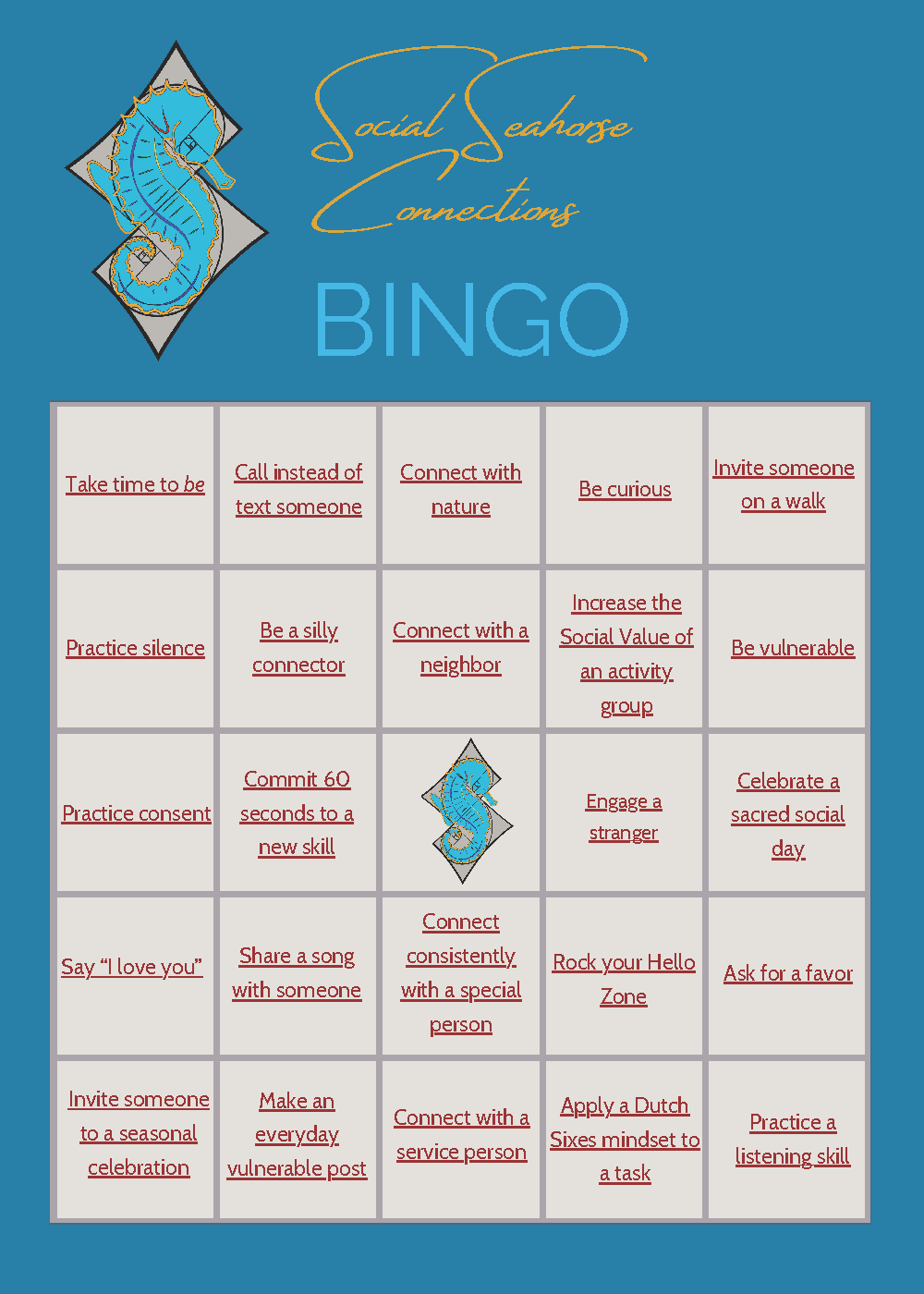
BINGO Card
Just don’t ask someone to fika in Italy. There it would be better to get an espresso, or if you are in Torino, try the hot chocolate for a truly decadent treat.
That’s important to know! Thank you. Mmmm…hot chocolate.