

An inflatable black cat dressed as a pumpkin greets me, bouncing happily in my neighbor’s yard along with his Disney friends as I take an evening stroll through my neighborhood.
A skeleton pirate leaps out at me from his station at the corner lamppost. Ghosts dance suspended from a tree. A creepy cross between a ghost, scarecrow, and skeleton flaps at me ominously in the wind.
I turn a corner, and a pink-themed skeleton display demonstrates the most commitment of all with a huge skeleton breaking through the roof, complete with disrupted roof tiles.

I reflect on how different Halloween is from when I was a child. Our parents would send us out in groups to canvass the neighborhood to trick-or-treat alone. We had no adults accompanying us. While I’m a little nostalgic for the exhilaration that freedom gave us, I’m also struck by how much more community involvement exists today.
Now, parents dress up as well, pulling their kids in wagons and tooling through the neighborhood in golf carts.
Houses serving adult beverages are identified so parents know where to head for their own neighbor connections. Groups of families travel together. Homeowners sit out on their porches, serving the throngs of ghosts and goblins as they excitedly rush up and down driveways for treats, interacting with kids of all ages.
This gives me hope.
In Bowling Alone: The Collapse and Revival of American

Community by Robert D. Putnam, he lays out a solid case for how Americans have withdrawn from the institutional and informal networks that previously fostered community — civic groups, churches, local clubs, casual socializing — and that this erosion of “social capital” has weakened the fabric of community life and civic democracy. In every statistical metric, community has been declining steadily since the 1970s.
“We […] know our neighbors less, meet with friends less frequently, and even socialize with our families less,” says Putnam in Bowling Alone.
Yet, we have Halloween.

"Halloween remains one of the few remaining rituals in American life that invites neighbors to open their doors to one another," says Jack Santino, a folklorist and professor emeritus of Popular Culture at Bowling Green State University, known for his work on American holidays and rituals, especially Halloween.
Beyond the commercialization that’s led Halloween decorations to rival Christmas displays, several social dynamics explain why the holiday has exploded in community involvement.
Social availability
Halloween provides a rare form of collective play in an increasingly individualistic society, providing social permission for creativity, humor, and even rebellion. In a time of digital disconnection, neighborhood trick-or-treating and decorating offers low-stakes, joyful community contact. It has enough structure to give people a sense of security about what to expect while also allowing for a wide-range of creative engagement.
As traditional religious participation has declined, secular rituals like Halloween fill some of the social and communal gaps. Halloween’s flexibility — spooky, funny, aesthetic, family-friendly, adult-party — lets people personalize their celebration style.
Shift to experience-based celebrations
Increasingly, people are shifting from celebrating with “things” to experiences, and haunted houses, pumpkin patches, fall festivals, and costume parties fit this need perfectly. Millennials and Gen Z adults, raised during the “experience economy,” have extended the holiday beyond childhood.

Communal identity
In many suburban and small-town settings, Halloween has become a stand-in for the neighborhood block party — an informal community ritual that transcends politics or religion. Urban planners and sociologists note that neighborhoods with visible Halloween participation often have higher neighbor recognition and trust (one of the metrics Putnam measures).
A recent Wall Street Journal opinion piece explains it this way: “Trick-or-treating is a civic ritual that builds trust and forms bonds between strangers.” (Halloween Treats for Democracy." The Wall Street Journal, 21 Oct. 2025, p. A15)
Culturally inclusive
Unlike religious holidays, Halloween is culturally inclusive and adaptable. It allows expression across cultures and doesn’t require family gatherings, making it appeal to singles and friend groups.
Halloween offers one of the few remaining opportunities for people to connect locally, express themselves freely, and take part in a shared ritual that’s fun, flexible, and visually spectacular.

How to connect with your community celebrations
If we want to rebuild the kind of community connection Putnam describes, Halloween offers a surprisingly simple place to start.
Maybe you haven’t turned on a porch light to receive trick-or-treaters in years and aren’t sure how to engage. If that’s you, here are a few tips for connecting with your neighborhood.
Become aware of how you can participate
Know your town’s trick-or-treating schedule.
Check your neighborhood’s social media pages to see what family-friendly and adult activities are planned. Our neighborhood does a Ding Dong Boozed activity for adults leading up to the holiday. It’s kind of like Secret Santa only with alcohol and snacks for the person you are assigned. Someone else made an interactive online map where people can input their address and mark if they are offering food, a fun activity, adult beverages and/or treats, or some other unusual way of celebrating.
Be intentional in your participation
Engage fully in trick-or-treating in particular if you are able. If you don’t live in a neighborhood, you might be able to do a trunk-or-treat at a nearby business or park.
We always give our closest neighbor kids something extra special. Some years, I’ve asked our close neighbors what their kids’ favorite candy is so I could set aside a special little package just for them. Other years, I had a larger or more elaborate gift item set aside for them.
Find ways to interact with the trick-or-treaters by perhaps offering a game or just asking them questions, the sillier, the better.
Be creative with your treats
If you have a neighborhood with lots of houses close together where kids get ridiculous amounts of candy in a short amount of time, you might offer something different. We’ve given out glow bracelets, Halloween-themed hand stamps, and iron-on patches.
Kids love getting to choose something that fits them. (To prevent overwhelm, don’t give them too many choices; make it easy by limiting options.)
Enjoy the celebration
If you don’t have the means to hand out treats, you might walk the neighborhood complimenting families on their costumes. You can sit with a neighbor while they give out treats or offer to sit with a family’s candy bowl while they take their own children around the neighborhood.
During and after trick-or-treating, you can post on your community social media page complimenting your neighbors in specific ways such as how much enjoyment their decorations bring you or how creative someone’s costume

was that you especially appreciated. Find ways to let your neighbors know you appreciate being in community with them.
Putnam warned of community’s slow decline, and every small act of community participation is a quiet act of revival. Halloween reminds us that connection isn’t lost — it just needs an invitation.
Golden Connection Challenge:
If you don’t usually join in celebrating, find a way to become part of the holiday this year. Or add a new element to how you participate in your community's Halloween celebrations.
Share this blog with others to increase social value in the new year.
I’d love to hear about your experiences with a comment here or email me using the contact form.
Sign up today!
Stay connected
&
Get the Free
2025 Golden Connections
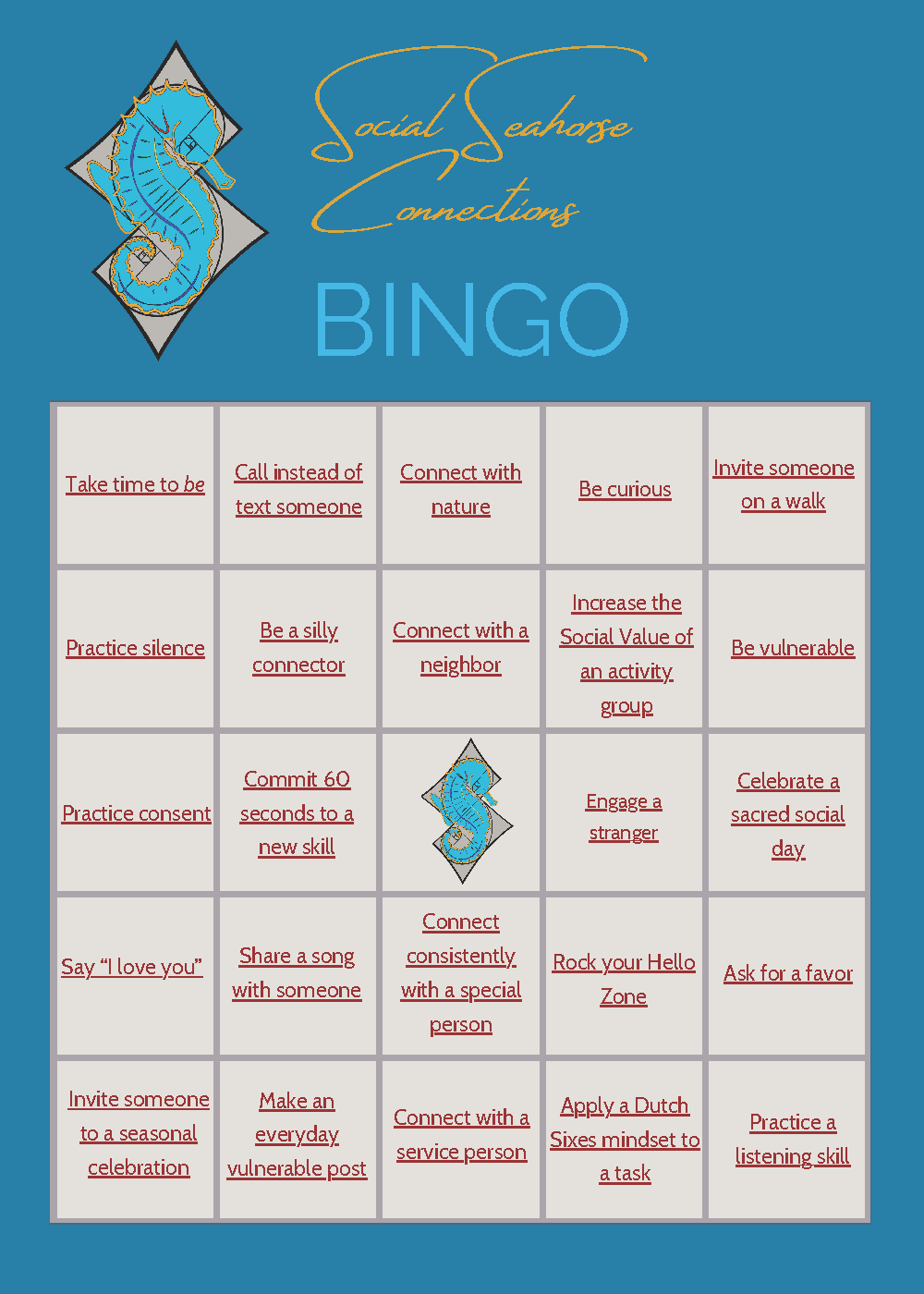
BINGO Card